Headless WordPress · WPGraphQL · Next.js
WordPress Development Company in Bangalore
We build WordPress for product companies: marketing sites and docs that marketers can edit without a release, design systems delivered as block patterns, and headless builds where WordPress holds the content and a React front end renders it.
Our head office is in Navi Mumbai and we have a team in Bangalore (Bengaluru). We also tell you when a plain WordPress theme is the better choice, because it often is.
- 7+Years in business
- 120+Brands served
- 55+Team members
- 250+Projects delivered
- 100+Platform certifications
In short
The Adroit is a WordPress development company with its head office in Navi Mumbai and a team in Bangalore. For product companies and startups we build WordPress marketing sites, block-pattern design systems and headless WordPress with WPGraphQL or REST and Next.js, held to Google's Core Web Vitals thresholds and released through staging and CI/CD.
Who we build for
WordPress for product companies, not just brochure sites
Many product companies and startups work in Bangalore, and their websites have a different job from a local business site. The marketing site has to ship new landing pages every week, the docs and changelog have to stay current, the pricing page has to match the product, and the whole thing has to load quickly for visitors on a laptop in Austin and a phone in Mysuru alike.
WordPress suits that job when it is set up as a content system: structured post types, a library of approved block patterns, roles for writers and reviewers, and a front end held to a performance budget. It suits it badly when it is a stack of page-builder plugins that nobody dares update.
For the full list of what we build in WordPress, from themes and plugins to WooCommerce and maintenance, see our WordPress development services page. This page covers the product-company slice: headless builds, design systems, performance budgets, preview and release workflows.
What this page covers
- Headless WordPress with WPGraphQL or the REST API and a Next.js or React front end
- SaaS marketing sites, docs, changelogs and comparison pages
- Design systems delivered as theme.json tokens and block patterns
- Performance budgets and caching from CDN to database
- Preview and draft workflows for editors
- CI/CD, staging and release checks
- A/B testing, analytics and CDP integration
Decision table
Monolithic or headless WordPress: which fits your site?
In a monolithic build WordPress renders the pages itself through a theme. In a headless build WordPress is only the content back end and a separate application renders the site. Neither is better in general. The table shows where each one earns its keep.
| Question | Monolithic (theme) | Headless (API + front end) |
|---|---|---|
| Editor preview | Works out of the box, including the block editor's live view. | Has to be built: a draft-mode route, a token and a tested preview button. |
| Plugins | Plugins that print their own front-end output (forms, sliders, SEO) just work. | Each plugin that renders on the front end needs an API route or a replacement component. |
| Front-end team | PHP and template skills are enough. | Needs React and Node skills on your side or ours, plus someone who owns the deployment. |
| Shared components with the product | Hard: the site and the app use different rendering stacks. | Natural: one component library can serve the marketing site and the app. |
| Several channels, one content source | Possible through the REST API but the theme remains the main consumer. | The reason to choose it: web, app and email can read the same entries. |
| Moving parts to run | One application, one host, one set of updates. | Two applications, an API, a cache and a webhook; more to monitor and release. |
| Speed | Good with page caching, a lean theme and disciplined plugins. | Good when pages are pre-built and cached at the edge; no better if the front end ships heavy JavaScript. |
When we tell you to stay monolithic
If your marketing team lives in the block editor, relies on preview, and your engineers would rather not own another deployment, a well-built block theme is the cheaper and more dependable answer. The same goes for sites whose important features come from plugins that render their own output. A fast monolithic site beats a slow headless one, and headless does not remove performance work, it moves it.
Headless starts to pay off when a React team already ships your product, when the same content feeds more than one channel, or when the front end needs interactions that a theme makes awkward. We usually settle the question in discovery by listing the three features editors use most and checking each against both options. That list, not fashion, decides.
Request path
What happens between a visitor and the database
A page that is fast in a demo and slow under load usually has one thing in common: every visit travels the whole way to WordPress. In our builds most visits stop at the first or second layer. The diagram shows the layers for a headless site; a monolithic site has the same idea with a page cache in place of the static build.
- CDN edge: serves the pre-built page and its static assets from a node near the visitor.
- Front-end server: builds a page on the first request or after a change, then stores it for the next visitor.
- API cache: repeated GraphQL or REST queries are answered from a cache instead of running again.
- Object cache: WordPress keeps expensive database results in memory (commonly Redis or Memcached).
- Database: only the work that nothing upstream could answer.
When an editor publishes, WordPress sends a webhook naming the changed entry, and the front end rebuilds only the pages that use it. That keeps pages fresh without clearing everything.
Performance budget
The numbers we hold a build to
A performance budget is a set of limits agreed before design is final, so that a new script or a bigger hero image has to justify itself. The three Core Web Vitals have published thresholds; Google counts a page as good when it meets them for at least 75 percent of real visits (Google, web.dev Core Web Vitals, checked Oct 2026). Limits for weight and requests are set per template with you, not copied from a template.
| Budget line | Limit | How we hold it |
|---|---|---|
| LCP, Largest Contentful Paint | 2.5 s or less at the 75th percentile | Pre-built pages from the edge, one prioritised hero image with fixed dimensions, no render-blocking tags above the fold. |
| INP, Interaction to Next Paint | 200 ms or less at the 75th percentile | Small client bundles, hydration only where a component is interactive, third-party tags loaded after the page is usable. |
| CLS, Cumulative Layout Shift | 0.1 or less at the 75th percentile | Reserved space for images, embeds and consent banners; font loading that does not reflow text. |
| JavaScript per template | Agreed per template in the proposal | A size check in CI that fails the build when a template crosses its limit. |
| Images and fonts | Agreed per template in the proposal | Modern formats, responsive sizes, a small set of font files, no unused weights. |
| Third-party scripts | Each one approved by name | A short written list of what loads, why, and who owns it; anything new needs a decision. |
Lab tools such as Lighthouse help while building, but the thresholds above are judged on field data from real visitors. We report on both in the monthly report once the site is live.
Design systems
Your design system as block patterns
Marketing teams ship faster when they assemble pages from approved pieces. WordPress supports this natively: design tokens live in theme.json, and reusable layouts are registered as block patterns or built as custom blocks. Editors pick a pattern, fill it in, and the result is on brand without a designer reviewing each page.
On a headless build the same tokens are shared with the React components, so a pricing table looks identical in the editor and on the live site. We keep one source of truth for colour, type scale and spacing, and document each pattern so new editors know when to use it.
The block editor also includes the Interactivity API, which has been part of core since WordPress 6.5 (WordPress developer documentation, checked Oct 2026). For modest interactions such as tabs, filters and accordions it lets a monolithic site stay light without a separate JavaScript framework.
| Layer | Where it lives | Who changes it |
|---|---|---|
| Tokens: colour, type, spacing | theme.json, shared with React | Design and engineering |
| Patterns: hero, feature grid, pricing | Registered patterns in the theme | Engineering, on request |
| Custom blocks for data-driven parts | A small plugin, versioned in Git | Engineering |
| Page content | The block editor | Marketing, without a release |
Editor and growth workflows
Preview, testing and analytics without breaking the site
Preview and drafts
Headless sites lose WordPress's built-in preview, so we rebuild it: a secured draft-mode route, a short-lived token and a Preview button that opens the unpublished revision in the real front end. We test it with your editors before launch, because it is the feature they miss first.
A/B testing
Variants are chosen at the edge or in the front end so visitors do not see a flicker, and each variant is a separate pattern or component, not a copy of the page. We agree the success event and the stop rule with your growth team before the test starts.
Analytics and CDP
We agree event names and a data layer with your analytics owner, handle consent in one place, and send customer events to your CDP from the server where we can. Tags load after the page is usable, so they count against the budget like any other script.
Release pipeline
From pull request to production
A release process is what lets a site change weekly without anyone holding their breath. The strip shows the stages we set up for a Bangalore product team; the tooling is picked to fit your hosting and Git provider.
- BranchWork happens on a branch in your repository, with a short description of the change.
- PreviewEach pull request gets its own preview link that editors and designers can open.
- ChecksCoding standards, tests where they exist, a front-end build and the bundle-size check run automatically.
- StagingThe change is tried against realistic content; sync rules stop staging data overwriting live edits.
- ReleasePromotion to production in a planned window, with a rollback path written down.
- MonitorErrors and Core Web Vitals are watched after release and summarised in the monthly report.
Facts
Versions we build on in 2026
| Item | Current position | What it means for your build |
|---|---|---|
| WordPress core | 7.1.2 released 22 Sep 2026 with a security fix; 7.1 on 19 Aug 2026; 7.0 on 20 May 2026 (wordpress.org, checked Oct 2026). | Only the latest version is officially supported, so we plan for routine core updates. |
| Next major release | 7.2 is proposed for 9 Dec 2026 (make.wordpress.org, checked Oct 2026). | A proposed date: we test plugins on the beta before it ships. |
| Server requirements | PHP 8.3 or newer, MariaDB 10.11+ or MySQL 8.0+, HTTPS (wordpress.org/about/requirements). | The API host and the front-end host both need current runtimes. |
| PHP support | 8.2 security fixes to 31 Dec 2026; 8.3 to 31 Dec 2027; 8.4 to 31 Dec 2028; 8.5 to 31 Dec 2029; 8.1 and older are end-of-life (php.net, checked Oct 2026). | We choose 8.3 or newer for new builds so the runtime stays supported. |
| Usage | WordPress runs on 40.2% of all websites and 58.7% of sites with a known CMS (W3Techs, Oct 2026). | Hiring, plugins and documentation are easy to find; that is a point in its favour, not a quality guarantee. |
Working with us
How a project with the Bangalore team runs
Our head office is in Navi Mumbai and the engineering for this work comes from our team in Bangalore. Projects run remotely: a written scope, demos on a staging link, a shared repository and a monthly progress report. Working hours and communication channels are agreed in the proposal.
Cost depends on a handful of decisions, quoted after discovery: monolithic or headless, the number of templates and patterns, how many integrations (CRM, analytics, billing pages, search), the amount of content to migrate, and how much testing and release automation you want. A fixed scope suits a defined marketing site; time-and-material suits a product site that keeps changing; a dedicated team suits a long roadmap. What is included in each is set out in the proposal.
- WordPress
- WPGraphQL
- REST API
- Next.js
- React
- theme.json
- Block patterns
- Redis
- Git CI/CD
Related pages
- WordPress development services: the full service overview
- PHP development company in Bangalore: custom application back ends
- Website development in Bangalore
- SEO company in Bangalore and GEO and AI search
- WordPress in New Delhi for multisite and institutional sites
- Our work and clients
Tell us what the site has to do and who edits it. We will come back with a recommendation, including whether headless is worth it for you.
Start with a conversationWork That Works
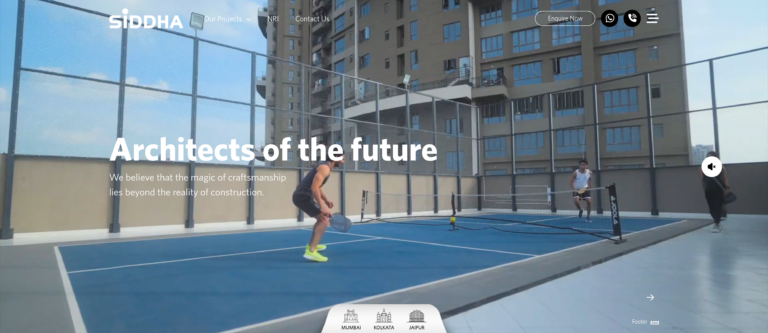
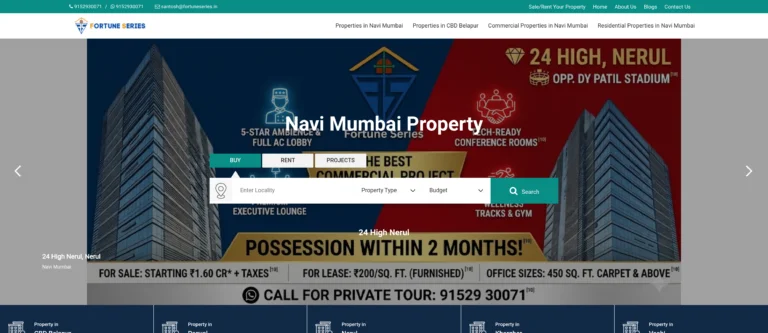
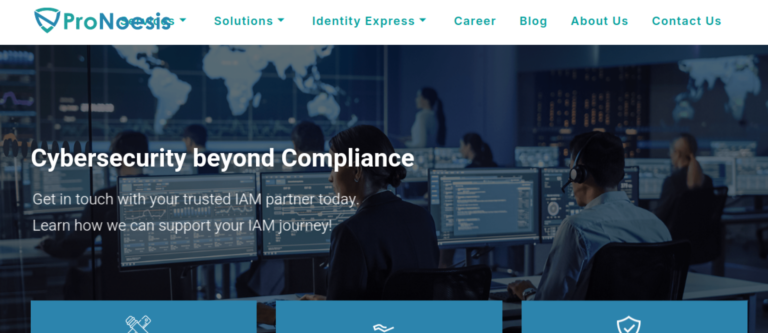
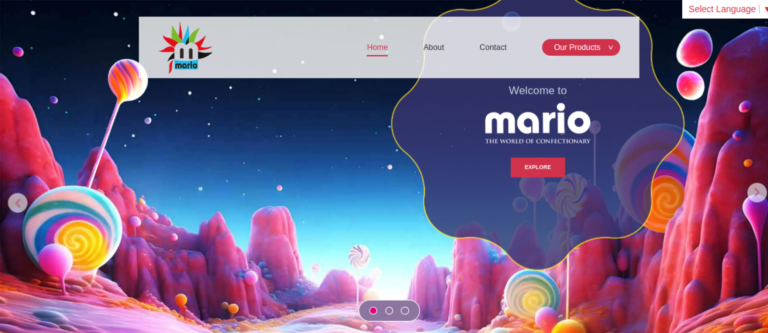
Explore our portfolio to see examples of our past projects and discover how we've helped businesses like yours achieve their online goals with our WordPress development solutions.




What's More
How Are We Different?
Dedicated Account Manager
SEO Enabled Websites
Responsive Websites
Site Security Upgrades & Maintenance
Website Speed & Performance Optimization
Timely Delivery
Easy to use CMS
Google PSI Score Above 80
Maximum 12 Hours TAT
Secured & Optimised Website Delivery
15 Days Cooling Period
Insights
Latest and Greatest Posts

Software Testing
Hire Remote QA Engineers in India | Top 10 Companies 2026-27
Your Success, Our Reputation




























































































Awards and Recognition





Reviews & Testimonials
What clients say about us
- 5.0Clutch rating from 19 reviews (opens in a new tab)
- 4.9DesignRush rating from 11 reviews (opens in a new tab)
- 4.9Google rating from 146 reviews (opens in a new tab)
"They’re a very efficient and professional team."
The Adroit has developed a website that meets the my specific needs and requirements. The team has helped improve the website's page rankings within the first two weeks of the project. The Adroit has been efficient, professional, supportive, communicative, and attentive to the client's needs.
 Kunal Om Tavri - Artist,
Kunal Om Tavri
"They were responsive and took action when required in urgency."
The Adroit delivered satisfying work that effectively matched the our ideas. The team was patient with the our requirements and changes and responded timely via WhatsApp, email and messaging apps, and in-person meetings. Ultimately, the team's responsibility made them a reliable partner.
 Tejinder Singh Bhabra - COO & Director,
ProNoesis
The Adroit is a team of passionate marketing professionals who have consistently contributed to our organization with digital support and assistance. They have always responded to our queries and helped us create an urban digital presence with modern designs that produced definite results.
 Luvkesh Agarwal - Founder & CEO,
Aertrip
"Their dedication, expertise, and commitment to delivering high-quality results have exceeded our expectations."
The Adroit team's dedication, expertise, and commitment have made the collaboration a pleasure. Their excellent communication kept us informed throughout the process, ensuring high-quality results from start to finish.
 Sachin Javale - Project Manager,
The SaltInc Consulting Pvt Ltd
The Team at The Adroit are a group of highly-skilled, experimental and fearless professionals in every sense of the word. It was a wonderful experience to see the instantaneous change and impact they drove on our page with their fun, strategic and consistent campaigns.
 Mr. Ravi Hudda - Chief Digital Officer,
Raymond Limited
"Their technical expertise and knowledge, and quick response time are impressive."
The Adroit team successfully increased website traffic and completed the project with zero downtime. We are quite happy with the service provided by the team. They always deliver on time and communicate well
 Mayank Raturi - Director Digital Marketing,
Checkmarx
"We want to express to you our warmest admiration for your unfailing service to us as one of our dependable partners."
The Adroit delivered the project on time, meeting the our expectations. They communicated frequently and promptly via email and virtual meetings, ensuring an effective workflow. Their agile responsiveness and transparency were hallmarks of their work.
 Ravi Vyas - Founder & CEO,
Sebone Technologies
Team at The Adroit is professional, quick, courteous, and very helpful. Their creatives & graphics are at par in the industry. Kaustubh, Creative Head does a phenomenal job on Social Topical creatives.
I appreciate their timely response & highly recommend The Adroit for Digital Marketing.
 Ashwini Thakur - Regional Director - South Asia,
Northumbria University
The Adroit Team is sharp, savvy, and surely ahead of the pack. With their clever and data-driven solutions, we’re now able to reach and convert new leads into loyal customers every day. Our numbers continue to grow consistently every month.
 Naresh Soni - Manager Marketing,
Weavings Manpower Solutions Pvt Ltd
"I appreciated their efforts and quality of work."
I was delighted, the project was completed in a timely manner. The Adroit followed a collaborative approach, which made me easy to work with. Moreover, they leveraged their knowledge and technical expertise to deliver quality and budget-friendly solutions.
 Rahul Bhatambre - Director,
Mindvein
Related work from our portfolio:
Questions
FAQs
For a product company we usually build the public side of the business: the marketing site, pricing and comparison pages, docs, changelog and blog, all editable by marketers without a release. That can be a conventional WordPress theme or a headless build where WordPress holds the content and a React front end renders it. Our head office is in Navi Mumbai and the engineering for this work sits with our team in Bangalore. Scope, deliverables and the release process are written into the proposal.
Go headless when a front-end team already ships React, when several channels need the same content, or when the marketing site must share components with the product. Keep a normal theme when editors rely on live previews, when your plugins render their own front-end output, or when nobody on your side will own a separate Node deployment. Headless adds a second application to host, monitor and release, so it should buy you something specific. We will tell you honestly if a block theme is the better fit.
Both ship well-supported routes. The REST API is in WordPress core, needs no extra plugin and suits simple lists and single entries. WPGraphQL is a plugin that lets the front end ask for exactly the fields and relationships a template needs in one request, which helps when pages combine posts, custom fields and menus. We choose per project, weigh plugin support for custom fields and forms, and put caching in front of whichever is used so the API is not hit on every visit.
Preview needs to be designed, not assumed. The usual pattern is a draft-mode route in the front end: the editor clicks Preview in WordPress, is sent to a secured URL on the front end with a short-lived token, and the page renders the latest draft revision instead of the cached copy. We build and test this early because it is the feature editors miss most after going headless. On a normal theme, preview works out of the box.
We cache in layers and invalidate on publish. Pages are generated ahead of time or on first request, stored at a CDN edge, and refreshed when WordPress sends a webhook after an editor publishes or updates an entry. The API behind it uses an object cache so repeated queries are cheap. The target is Google's published thresholds for a good experience at the 75th percentile: LCP of 2.5 seconds or less, INP of 200 milliseconds or less and CLS of 0.1 or less.
Yes, and it is one of the better uses of the block editor. Design tokens such as colours, type scale and spacing go into theme.json, and reusable layouts such as hero, feature grid, pricing table and testimonial become registered patterns or custom blocks. Editors then assemble pages from approved pieces and cannot drift off brand. For a headless build the same tokens are shared with the React components so the editor and the live site match.
They are integrations to plan, not plugins to drop in. We agree the event names and data layer with your analytics owner, load tags so they do not block rendering, and keep consent handling in one place. For A/B tests on a headless site, variants are normally chosen at the edge or in the front end so there is no flicker; on a theme they can be handled by your testing tool. Customer data platform connections are made server-side where possible.
Code lives in a Git repository, every pull request gets a preview environment, and automated checks run before merge: coding standards, tests where they exist, and a build of the front end. Releases go to staging first, are checked against real content, then promoted to production with a rollback path. Database and media sync rules are written down so staging content never overwrites live edits. The exact tooling is chosen to fit your hosting.
It can be, if writers want a visual editor, review workflow and search without touching Markdown. If your engineers prefer docs as Markdown in the same repository as the code, a docs generator is usually simpler and we will say so. A hybrid also works: the marketing site and blog on WordPress, and the versioned technical docs on a separate docs tool, linked with consistent navigation and a shared design system.
No. Our head office is in Navi Mumbai and we have a team in Bangalore, and projects run remotely with written scope, scheduled demos on a staging link and a monthly progress report. You can be anywhere in India or overseas. Working hours and communication channels are agreed in the proposal. If you want to talk it through first, the contact page is the quickest route.