Rails engineers, matched to your team
Hire Ruby on Rails Developers from India
Add Rails engineers to your team, or hand us a Rails product to build and run. Your developers work in your repository, your tracker and your cloud accounts, on hours that overlap with yours. Our head office is in Navi Mumbai, with teams in Mumbai, Bangalore, Delhi.
Choose a dedicated developer or team, a part-time developer, hourly time and material, or a fixed-scope project. We send one progress report a month.
- Interview before you commit
- Code and accounts stay yours
- Daily written updates
- Monthly progress report
Rails developer
Not a real person. This is what each profile you review will cover.
- Stack
- RubyRails 8.xHotwirePostgreSQLRSpec
- Works in
- Your repository, tracker and staging
- Overlap
- Hours agreed with you at kickoff
- Updates
- Daily written note, one monthly report
- Access
- Granted by you, removed by you
You interview the people on the shortlist before anyone starts.
To hire Ruby on Rails developers from India with The Adroit, you share your brief, review matched profiles, interview the shortlist, sign the agreement and NDA, and onboard the developers into your own repository and tools. You can engage a dedicated developer or team on a monthly basis, a part-time developer, an hourly time-and-material arrangement or a fixed-scope project. India Standard Time is UTC+5:30, so overlap hours are agreed at kickoff; work is reported in daily written updates and one monthly report. Your code, repositories, hosting and third-party accounts belong to you. Head office in Navi Mumbai, teams in Mumbai, Bangalore, Delhi. Figures are set in a written proposal after a short call.
Why India
Why hire Ruby on Rails developers from India?
Rails rewards experienced engineers and consistent conventions, and a well-run team in India can give you both without the cost and delay of building a local team from scratch. Six reasons businesses abroad make that choice:
A deep pool to match from
India has one of the largest software engineering workforces in the world, so a role can be matched on stack, seniority and domain rather than filled with whoever is free.
Cost leverage, in the open
Engineering capacity from India is generally less costly than the same seniority hired locally in the US, UK, EU or Australia. We quote figures only in a written proposal.
Hours that overlap
An Indian working day overlaps well with the Gulf and Singapore, reaches into the European afternoon and part of the Australian morning. See the overlap chart below.
Written-first by habit
A shared tracker, reviewed pull requests, a staging site and short demos keep progress visible without anyone sitting in the same office.
Scale up or down
Add a second developer, a QA engineer or a front-end specialist when the roadmap grows, and reduce capacity when it shrinks, as the agreement allows.
Work waiting in the morning
For clients in the Americas, a day of development finishes while you sleep: reviewed work and a short note are there when you start.
The honest trade-offs. Your hours and ours do not match by default, so overlap has to be agreed. India has no daylight saving, so the gap with the UK, Europe, the US and Australia moves by an hour twice a year. And a team at a distance needs clear written requirements. All three are manageable, and the sections below show how.
The process
How does hiring Rails developers from India work, step by step?
Six steps, in this order, with you deciding at steps 3 and 4. Nothing is shared or signed before you have spoken to the proposed developers.
Share the brief
A short call about your product, the Rails version you run, the team you have and the outcome you need.
Define the role
We turn it into a profile: skills, seniority, working hours, overlap with your day and expected duration.
Review matched profiles
You receive a shortlist of Rails developers whose experience fits your stack and domain.
Interview them
You speak to the people before anyone starts, and can add a practical task of your own.
Agree the terms
Engagement model, NDA and agreement are signed, with code and account ownership stated in writing.
Kick off and onboard
Access is granted, the environment is set up and the first cycle of work starts in your tools.
Engagement models
Which engagement model fits: dedicated, part-time, hourly or fixed scope?
The model decides who carries scope risk and how your spend behaves. We list no prices on this page because they depend on seniority, number of developers, term and scope. A written proposal after discovery sets them out.
Dedicated developer or team
One developer or a small team works only on your product, billed monthly. You steer priorities day to day.
Best for: Live products with a steady roadmap.
Part-time developer
A fixed share of a developer's week for lighter roadmaps, maintenance or a growing codebase that needs a regular pair of hands.
Best for: Support, upkeep and small feature queues.
Hourly (time and material)
You fund hours as they are worked, against a backlog you prioritise with us and see in the tracker.
Best for: Changing scope, audits, upgrades with unknowns.
Fixed-scope project
A written scope with milestones and an agreed price. Changes go through a change request.
Best for: A clear MVP slice or an internal tool.
| Model | Control over priorities | Predictable spend | Room to change scope | Continuity of the same people |
|---|---|---|---|---|
| Dedicated developer or team | High | Medium | Medium | High |
| Part-time developer | Medium | Medium | Medium | Medium |
| Hourly (time and material) | High | Low | High | Medium |
| Fixed-scope project | Low | High | Low | Medium |
Few engagements stay in one model: a fixed-scope first release often moves to hourly work and then to a dedicated team once the roadmap settles. For the remote working rhythm behind each model, see our Ruby on Rails development company in India page.
Vetting and matching
How are Rails developers vetted and matched to your project?
Every shortlist passes five checks before it reaches you, and then you make the final call by interview.
- 1
Profile and experience read
Rails and Ruby versions used, domains worked in, length and depth of experience.
- 2
Code and architecture review
A walk through real work: models, queries, background jobs and the reasoning behind them.
- 3
Practical Rails exercise
A small task on Active Record, a controller or a job, written with tests.
- 4
Communication check
Communication, and how clearly the person explains trade-offs.
- 5
Match to your project
Fit to your stack, domain, working hours and the seniority your roadmap needs.
- 6
You interview
Your decision, with our tech lead available to help.
Junior
Works on well-defined tickets with every change reviewed.
Mid-level
Owns a feature from model to view to tests.
Senior
Designs, reviews, mentors and owns the technical risk.
Tech lead
Plans the architecture and speaks for the team to your product owner.
Time zones and communication
What time-zone overlap will you have with a team in India?
India Standard Time is UTC+5:30 all year. The chart shows an illustrative Indian working day of 10:00 to 19:00 IST against a 09:00 to 18:00 working day in each region. The real overlap window is agreed with you at kickoff and written into the proposal.
Overlap with an Indian working day
Bars show each region's 09:00 to 18:00 on a 24-hour UTC scale. The ruby band is the illustrative Indian day (04:30 to 13:30 UTC).
Standard time shown. UK, Europe, the US and Australia change clocks, which moves their overlap by an hour. For US clients, we agree either a shifted window or a written hand-off rhythm with a short call, rather than assuming one.
Daily written update
What was done, what is next and anything blocking, in the tracker or your chat tool.
Calls in the overlap
Planning, demos and questions happen in the hours we agree at kickoff.
Staging you can open
Each cycle is deployed to a staging site, so you see working software, not slides.
One monthly report
Work completed, work planned, open risks and the decisions we need from you.
Onboarding
What happens in the first weeks after the developers start?
A typical shape, adjusted to your codebase and team. The aim is that by the end of the first month the developers are shipping reviewed work in your process and you have your first report.
Access and orientation
- Repository, tracker and staging access, granted by you
- App running locally from the README
- Walk-through of the codebase and release process
First tickets
- Small tickets through your review process
- Tests green before every merge
- Questions and gaps written down
Steady cadence
- Full-size tasks owned end to end
- First demo on staging
- Overlap hours adjusted if needed
First report
- Monthly report: done, next, risks, decisions
- Backlog re-prioritised with you
- Team size reviewed against the roadmap
Team structure
How does a hired Rails team fit around your product?
You keep the product decisions. The team keeps the engineering quality. A named account manager at The Adroit keeps the engagement itself on track.
You: product owner or CTO
Sets priorities, accepts work, owns the product.
Tech lead or senior Rails developer
Plans the work, reviews code, raises risks early.
Rails developer
Builds features with tests.
Rails developer
Builds features with tests.
Account manager
Reports, invoices, escalations.
Add when the roadmap needs them: a QA engineer, a front-end developer (React, Vue or Hotwire), a DevOps engineer.
Skills checklist
What should a Ruby on Rails developer know in 2026?
Use this as a checklist when you interview, whoever you hire. The table after it gives questions to ask and what a weak answer looks like.
Ruby and Rails 8.x
Idiomatic Ruby, the Rails conventions and what changed in recent releases.
Hotwire
Turbo and Stimulus for fast, server-rendered interfaces.
Active Record and PostgreSQL
Schema design, indexes, avoiding N+1 queries, safe migrations.
Background jobs
Active Job with a queue such as Solid Queue or Sidekiq, retries and idempotency.
Testing
RSpec or Minitest, factories, system tests and CI that fails loudly.
APIs and authentication
JSON APIs, versioning, token auth and third-party integrations.
Upgrades and legacy
Moving between Rails versions in steps and untangling inherited code.
Security basics
Strong parameters, authorisation, secrets handling, dependency audits.
Delivery
Docker, CI/CD, deployment and logs on the cloud you use.
| Topic | Ask | A strong answer sounds like | A warning sign |
|---|---|---|---|
| Active Record | How would you find and fix an N+1 query? | Names eager loading (includes), shows how to spot it in logs or a tool, and mentions an index where needed. | Says "add caching" first, or has no way to detect it. |
| Background jobs | What makes a job safe to retry? | Idempotency, unique keys, handling partial failure, and where the failure is logged. | Assumes a job always runs exactly once. |
| Testing | What do you test at which level? | Fast model and request tests, a few system tests for key flows, and a clear view of what is not worth testing. | Either no tests, or only slow end-to-end tests. |
| Upgrades | How would you move an app from an older Rails version to 8.x? | One minor version at a time, green tests first, deprecation warnings cleared, a rollback plan. | Plans one big jump with no test safety net. |
| Security | How do you handle secrets and user permissions? | Encrypted credentials or a vault, never in the repo; explicit authorisation on every action. | Keys in chat or in version control. |
| Communication | Explain a trade-off you made, in writing. | Clear, short, with options and a recommendation. | Vague or only verbal. |
For what Rails is, how its versions are supported and what drives project effort, read our Ruby on Rails services overview.
Compare the options
Hire from The Adroit, a freelancer or an in-house developer?
No option wins everywhere. This is how they differ on the points that usually decide it.
| What matters | Hire through The Adroit | Freelancer | In-house hire |
|---|---|---|---|
| Time to start | Matched profiles from a shortlist; you interview, then onboard. | Depends on availability and your own search. | Job post, hiring rounds, notice period. |
| If someone is unavailable | Another developer can be brought in; work lives in your repo and tracker. | Work often pauses until they return. | Work pauses; cover is your problem. |
| Management load on you | Light: tech lead and account manager handle routine follow-up. | You manage everything. | You manage, mentor and retain. |
| Second pair of eyes | Reviews inside the team, plus seniors on call. | Usually none unless you add it. | Only if you hire more than one engineer. |
| Contract, NDA and IP | Agreement and NDA with code ownership stated. | Varies; you draft or negotiate it yourself. | Employment contract under local law. |
| Scaling up or down | Add or reduce developers as the agreement allows. | Find and onboard another freelancer. | Hiring and, sometimes, redundancy processes. |
| How cost behaves | Recurring or per-scope amounts set in a proposal. | Per hour or per project; varies widely. | Salary plus hiring, benefits, equipment and notice (ask your accountant). |
| Best for | Steady roadmap or a defined build. | A small, well-bounded task. | A core product team you will grow for years. |
Security, IP and ownership
Who owns the code, and how is your intellectual property protected?
You do. Code, repositories, hosting and third-party accounts belong to the client, and the agreement says so in plain terms.
Cross-border contracts, tax and data-protection rules differ by country. Ask your lawyer or accountant to review the agreement for your situation.
- NDA signed before code or documents are shared
- Code and intellectual property belong to you
- Repositories sit in your organisation
- Hosting and third-party accounts are yours, in your name
- Access is least-privilege and removed when work ends
- Secrets live in a vault or encrypted credentials, not in chat
- Every change is reviewed before it is merged
- A written offboarding checklist closes access and hands over notes
Risk and replacement
What if it does not work out?
Remote engagements have risks, and each has a simple answer. Replacement and exit terms are written into the agreement rather than assumed from this page.
| Risk | What reduces it |
|---|---|
| The developer is not the right fit | Tell your account manager. A replacement is proposed, and notes in your tracker and repo make the hand-over short. |
| A key person leaves or is away | Work, decisions and context live in your repository and tracker, and a second developer reviews the code. |
| Time-zone friction | Overlap hours are agreed up front, with written hand-offs and daily updates for everything outside them. |
| Scope drifts | A prioritised backlog, short cycles with demos and a change process keep it visible. |
| Quality slips | Reviewed pull requests, automated tests and continuous integration before each release. |
| The codebase is a mystery | Start with an audit of the inherited app before committing to a larger plan. |
Decision guide
Which way should you hire?
Find the line that sounds most like your situation.
You can list the features and the list will hold
Fixed-scope project
You need Rails engineers for six months or more
Dedicated developer or team
Scope will change, or you are auditing or upgrading an app
Hourly (time and material)
You need a few days of Rails help each week
Part-time developer
You already have a team and need extra hands in your process
Dedicated developers, inside your workflow
You have no technical lead on your side
A team that includes a tech lead
Keep exploring
Related pages for hiring Rails developers
Work That Works
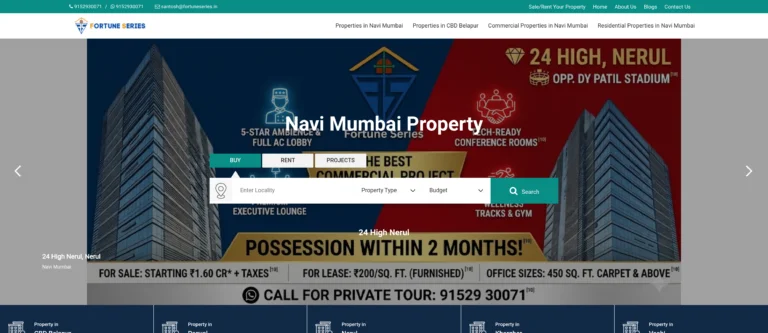
Check out our portfolio to see our past projects and learn how our developers supported businesses like yours in achieving their online ambitions with our Ruby on Rails solutions.










Your Success, Our Reputation
































































































Insights
Latest and Greatest Posts

Ruby on Rails
AI and Machine Learning Integration in Rails
What's More
How Are We Different?
Dedicated Escalation Manager
Maximum 12 Hours TAT
Low Price in Industry
Quick Replacement
Min 6 Months Contract
1 Month Exit Notice
Time-zone Compatibility
Awards and Recognition





Reviews & Testimonials
What clients say about us
- 5.0Clutch rating from 19 reviews (opens in a new tab)
- 4.9DesignRush rating from 11 reviews (opens in a new tab)
- 4.9Google rating from 146 reviews (opens in a new tab)
Team at The Adroit is professional, quick, courteous, and very helpful. Their creatives & graphics are at par in the industry. Kaustubh, Creative Head does a phenomenal job on Social Topical creatives.
I appreciate their timely response & highly recommend The Adroit for Digital Marketing.
 Ashwini Thakur - Regional Director - South Asia,
Northumbria University
The Adroit Team is sharp, savvy, and surely ahead of the pack. With their clever and data-driven solutions, we’re now able to reach and convert new leads into loyal customers every day. Our numbers continue to grow consistently every month.
 Naresh Soni - Manager Marketing,
Weavings Manpower Solutions Pvt Ltd
"I appreciated their efforts and quality of work."
I was delighted, the project was completed in a timely manner. The Adroit followed a collaborative approach, which made me easy to work with. Moreover, they leveraged their knowledge and technical expertise to deliver quality and budget-friendly solutions.
 Rahul Bhatambre - Director,
Mindvein
"They’re a very efficient and professional team."
The Adroit has developed a website that meets the my specific needs and requirements. The team has helped improve the website's page rankings within the first two weeks of the project. The Adroit has been efficient, professional, supportive, communicative, and attentive to the client's needs.
 Kunal Om Tavri - Artist,
Kunal Om Tavri
"They were responsive and took action when required in urgency."
The Adroit delivered satisfying work that effectively matched the our ideas. The team was patient with the our requirements and changes and responded timely via WhatsApp, email and messaging apps, and in-person meetings. Ultimately, the team's responsibility made them a reliable partner.
 Tejinder Singh Bhabra - COO & Director,
ProNoesis
The Adroit is a team of passionate marketing professionals who have consistently contributed to our organization with digital support and assistance. They have always responded to our queries and helped us create an urban digital presence with modern designs that produced definite results.
 Luvkesh Agarwal - Founder & CEO,
Aertrip
"Their dedication, expertise, and commitment to delivering high-quality results have exceeded our expectations."
The Adroit team's dedication, expertise, and commitment have made the collaboration a pleasure. Their excellent communication kept us informed throughout the process, ensuring high-quality results from start to finish.
 Sachin Javale - Project Manager,
The SaltInc Consulting Pvt Ltd
The Team at The Adroit are a group of highly-skilled, experimental and fearless professionals in every sense of the word. It was a wonderful experience to see the instantaneous change and impact they drove on our page with their fun, strategic and consistent campaigns.
 Mr. Ravi Hudda - Chief Digital Officer,
Raymond Limited
"Their technical expertise and knowledge, and quick response time are impressive."
The Adroit team successfully increased website traffic and completed the project with zero downtime. We are quite happy with the service provided by the team. They always deliver on time and communicate well
 Mayank Raturi - Director Digital Marketing,
Checkmarx
"We want to express to you our warmest admiration for your unfailing service to us as one of our dependable partners."
The Adroit delivered the project on time, meeting the our expectations. They communicated frequently and promptly via email and virtual meetings, ensuring an effective workflow. Their agile responsiveness and transparency were hallmarks of their work.
 Ravi Vyas - Founder & CEO,
Sebone Technologies
Related work from our portfolio:
Questions
FAQs
Mainly for access and flexibility. India has a very large engineering workforce, so you can match on Rails experience, seniority and domain, and you can add or reduce capacity as your roadmap changes. Engineering cost is generally lower than local hiring in the US, UK, EU or Australia, but we publish no prices: they are set in a written proposal. The trade-offs are overlap hours and the need for clear written requirements, both of which are agreed at kickoff.
You share a brief on a short call, we define the role together, you receive matched profiles, you interview the shortlist, you agree the engagement model, NDA and agreement, and the developers are onboarded into your repository, tracker and staging environment. Nothing is signed before you have spoken to the proposed developers.
Four. A dedicated developer or dedicated team billed monthly, a part-time developer, an hourly time-and-material arrangement, and a fixed-scope project with milestones. Many clients start with one and change later, for example a fixed-scope first release followed by a dedicated team once the roadmap settles.
We do not list prices on this page because the figure depends on seniority, how many developers you need, the engagement model and the length of the term. After a short call we send a written proposal with the figures and what they cover. That keeps comparisons with freelancers or local hiring honest, because the scope is written down.
Candidates are checked on their profile and experience, a review of real code, a practical Rails exercise with tests, and communication skills. They are then matched on stack, domain, seniority and working hours. You make the final decision by interviewing the shortlist, and our tech lead can join the interview if you want a second opinion.
India Standard Time is UTC+5:30 with no daylight saving. In a typical Indian working day, the overlap is largest with the Gulf, good with Singapore and Central Europe, shorter with the UK and Australia, and none by default with the US, where we agree a shifted window or a written hand-off rhythm with a short call. The window is agreed with you at kickoff and written into the proposal; clocks changing in your country will move it by an hour.
Developers send a daily written update, work from a shared tracker, deploy each cycle to a staging site you can open, and join calls in the agreed overlap hours. Once a month you receive one report covering work completed, work planned, open risks and decisions needed from you. We work with clients across India and overseas, remotely.
You do. Code, repositories, hosting and third-party accounts belong to the client, and the agreement states this in writing. We work in your repository and your accounts wherever possible, so there is nothing to transfer at the end beyond removing our access.
Yes. An NDA is signed before code or documents are shared. Access is limited to what the work needs, secrets are kept in a vault or encrypted credentials rather than chat, and a written offboarding checklist removes access when the engagement ends. For cross-border contract, tax and data-protection questions, ask your own lawyer or accountant to review the terms for your country.
Tell your account manager early. A replacement is proposed, and because work, decisions and notes live in your repository and tracker, the hand-over is short. Replacement and exit terms are written into the agreement, not assumed from this page.
Ruby and Rails 8.x, Hotwire (Turbo and Stimulus), Active Record with PostgreSQL, Active Job with a queue such as Solid Queue or Sidekiq, testing with RSpec or Minitest, JSON APIs and authentication, safe upgrades between Rails versions, and security basics. Delivery skills such as Docker, CI/CD and cloud deployment are a strong plus.
One is fine. Many clients start with a single developer, either full time or part time, and add a second developer, QA or front-end specialist when the roadmap needs it. If you have no technical lead on your side, we suggest including a tech lead or senior developer in the team.
Yes. Developers work in your repository, follow your branching and review rules, use your tracker and chat tool, and deploy through your pipeline. If you do not have a pipeline or tests yet, they can help set them up.
Yes. We usually begin with an audit of the inherited app, then upgrade it one Rails version at a time with tests as the safety net. See our Ruby on Rails development company in India page for how that works.
Yes. A tech lead can translate your goals into a backlog, review the work and explain trade-offs in plain language, and the monthly report is written for business readers. You focus on priorities and the outcome you need.